
Content
A stripped M1.6 recess can halt an automated assembly line for twenty minutes, and the price of the electronic screw itself is irrelevant next to that downtime. Below M3, the gap between a screw that drives cleanly and one that damages the head often comes down to a fraction of a millimeter in recess depth, the wrong surface finish, or a drive geometry that was never intended for power tools.
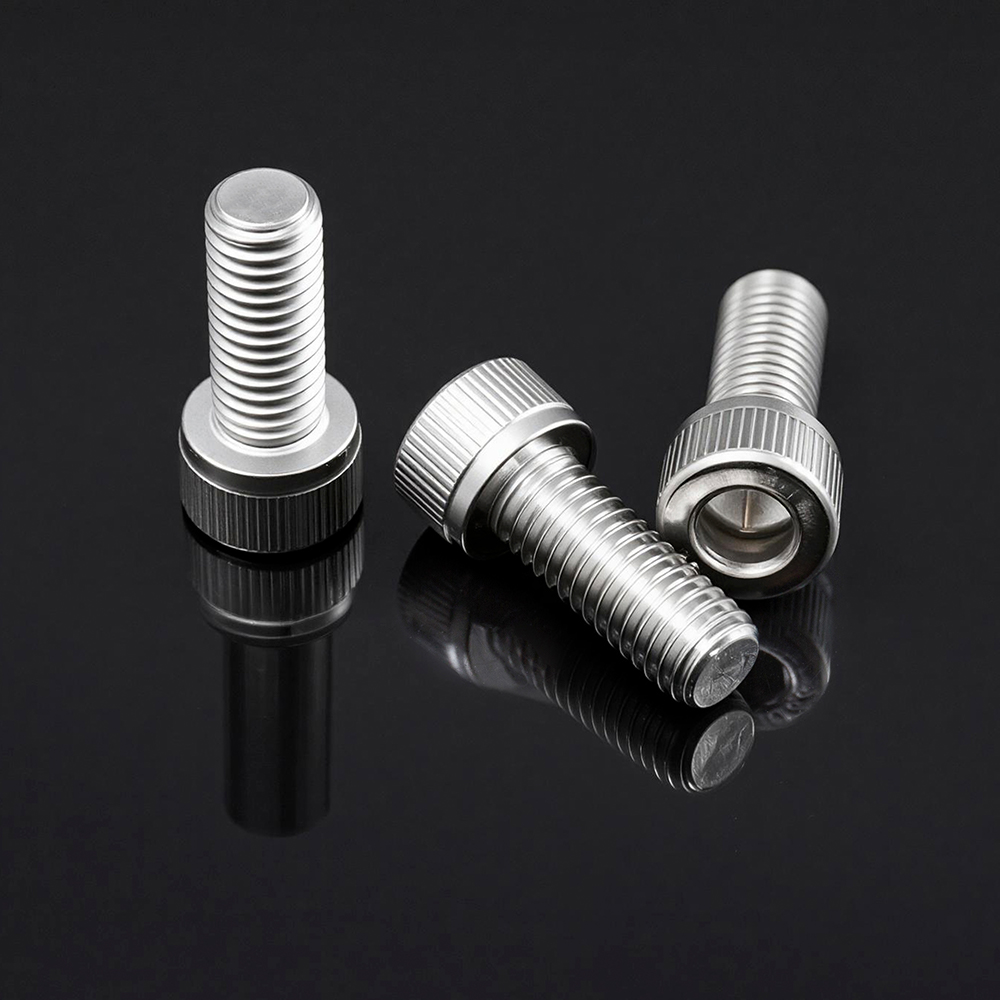
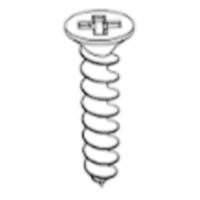
An electronic screw is a miniature threaded fastener, usually between M0.8 and M3 in diameter, produced to tight dimensional tolerances with a precision drive recess so it can fasten thin panels, circuit boards, and small housings without deforming the surrounding material.
Three characteristics separate it from a general-purpose machine screw:
Metric electronic screws use the 60-degree thread form defined by ISO 68-1, and the practical working range runs from M1.0 to M3.0. Choosing the right size is a question of pitch, engagement depth, and the material the screw threads into.
| Size | Pitch | Length range | Typical application |
| M1.0 | 0.25 mm | 1.5 to 4 mm | Camera modules, wearable sensors |
| M1.2 | 0.25 mm | 2 to 5 mm | Smartphone frames, connector covers |
| M1.4 | 0.30 mm | 2 to 6 mm | Small brackets, antenna mounts |
| M1.6 | 0.35 mm | 2 to 8 mm | PCB mounting, enclosure assembly |
| M2.0 | 0.40 mm | 3 to 10 mm | Laptop housings, drive caddies |
| M2.5 | 0.45 mm | 3 to 12 mm | Control panels, industrial displays |
| M3.0 | 0.50 mm | 4 to 16 mm | Appliances, larger electronics |
Engagement depth should reach at least twice the nominal diameter. An M1.6 screw threaded only 1.5 mm into a plastic boss concentrates load on too few threads and will strip the boss long before the screw reaches its rated torque.
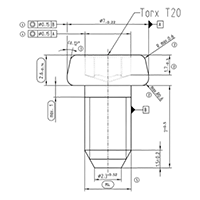
Torx and hex socket drives outperform cross recess drives in electronic assembly because they transfer torque through flat, vertical contact faces rather than angled cam surfaces that push the bit out of the recess.
A cross recess is designed to cam out once torque passes a threshold. That behavior protects a hand tool and a soft screw head, but in automated assembly it becomes a liability, because the threshold shifts with bit wear, coating thickness, and driver alignment.
Stainless steel 304 is the default material for electronic screws, but nickel-plated carbon steel wins on cost and conductivity, while brass and 316 stainless handle specific electrical and corrosion requirements.
Nickel plating thickness typically sits between 3 and 8 micrometers. Below 2 micrometers, porosity rises sharply and screws begin to pit in humid storage before they ever reach the assembly line.
Most electronic screw failures are not thread failures. They are recess wear, stripped plastic bosses, or over-torqued heads, and each one points back to a torque value that was never matched to the material.
These figures assume engagement depth of at least twice the nominal diameter. Shorten that engagement and the safe torque drops fast, because the same load spreads across fewer threads and the plastic boss deforms instead of the fastener.
Thread tolerance class 6g is standard for electronic screws. It is a clearance fit that keeps assembly predictable, but it also means a screw from one supplier and a tapped hole from another will rarely reproduce the fit of a paired set.
Approving an electronic screw supplier is a documentation and metrology exercise, not a price comparison. Five checks separate a reliable source from one that will send you a nonconforming batch six months into production.
Standard electronic screws and custom non-standard parts follow different approval paths. For custom work, add a first-article inspection report and a dimensional drawing signed off by both sides before mass production begins.
M1.6 and M2.0 dominate consumer electronics. M1.6 covers printed circuit board mounting and small enclosure assembly, while M2.0 handles laptop housings and slightly heavier panels. Below M1.4, screws are typically reserved for camera modules, wearables, and precision sensor packages.
It depends on the material. Nickel-plated carbon steel is distinctly magnetic. Stainless 304 becomes weakly magnetic after cold forming, and 316 stainless stays essentially non-magnetic. If a screw sits near a magnetic sensor or a shielding path, specify 316 stainless or brass.
Start with 0.25 to 0.40 N.m for stainless steel threaded into plastic or thin metal, assuming engagement of at least 4 mm. Reduce the upper bound by roughly a third when threading into unreinforced plastic, and always confirm with a torque test on the actual boss design.
Machine screws threading into metal inserts can usually be reused several times without losing function. Thread-forming screws that cut their own path into plastic are designed for single installation, because the formed threads wear with each removal and the holding force drops quickly.



 English
 Español
 عربى