

Content
A maintenance planner on a vibrating conveyor drive recently asked a question that comes up in almost every heavy plant: every M10 bolt on the bracket already carries a split washer, so why does the joint still work loose every six weeks? The honest answer separates the two jobs people expect from helical spring washers. As elastic, low-cost components they deliver real, measurable advantages - tolerance take-up, live contact across wear and thermal movement, and load spreading on soft faces. As locking devices, vibration testing has repeatedly shown they do not stop a nut from rotating loose.
That distinction matters commercially as much as technically. Split washers cost pennies, ship in every size from M2 upward, and fit both DIN 127 and ASME imperial ranges, so they will stay in every catalogue. The skill is knowing which advantage your joint actually needs, and when a different device should carry the locking job instead.
A helical spring washer is a split ring of square-section spring steel formed into a gentle helix, so that tightening a bolt compresses it the way a very short, very stiff coil spring would be compressed.
Definition: a helical spring washer (split lock washer) is a helically formed ring with a square cross-section and offset ends, standardised in metric sizes as DIN 127 and in imperial sizes under ASME B18.21.1. Under preload it flattens against the bearing surfaces and stores elastic deflection - the single property every genuine advantage traces back to.
Two traditional claims are made for it. The first, that the split ends lock the assembly against rotation, fails in instrumented vibration tests. The second, that the washer's spring rate makes a joint more resistant to relaxation, is only half true: an M8 split washer typically flattens at a few kilonewtons, while a property class 8.8 M8 bolt runs around 20 kN of preload. Beyond flattening, the part behaves like a plain washer, so the spring effect disappears exactly where a heavily loaded joint needs it most.
The advantages worth buying are low-load elasticity, end-play compensation, surface-friendly load spreading, universal availability and near-zero cost. A few numbers explain why the part has survived more than a century of service:
Field note: in loose-joint failure audits, the split washer is rarely the root cause. It is usually a symptom-spec, added by someone hoping for a locking action the part was never able to deliver.
Under transverse vibration, helical spring washers have repeatedly failed to prevent self-loosening, and several test series show the loosening rate increasing rather than falling.
Gerhard Junker's 1969 work established the mechanism engineers still quote today. When transverse loads create relative slip between the mating threads and the bearing surfaces, the inclined planes of the thread walk the nut backwards, even in a fully preloaded joint. A flattened split washer does nothing to stop that rotation, and its eccentric, rocking edge contact can add micro-movement that accelerates preload loss. Comparative tests on M8 fasteners against a plain nut show the characteristic pattern below.
One version of the spring-rate argument survives testing. A modest extra elasticity in the joint does reduce preload loss caused by embedding and relaxation, the slow permanent flattening of surfaces under load. That is why some installations put a flat washer under the split washer: the flat washer stabilises the bearing surface while the joint gains a little compliance. The benefit shows up in slowly relaxing joints, never in vibrating ones.
If you build that pairing, the flat washer should be the harder, smoother partner in contact with the joint face:
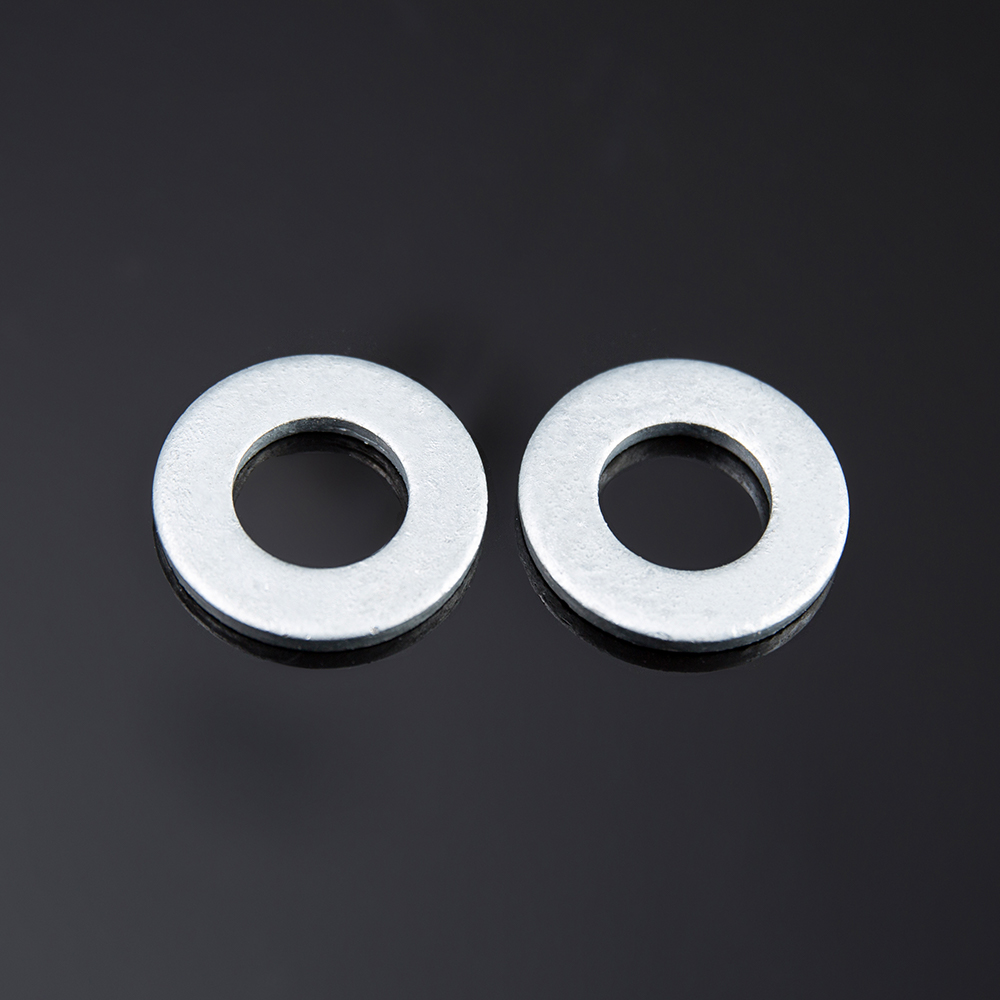 Standard Flat Washer for Load DistributionA precision-sized flat disc that spreads clamping force and protects joint surfaces. It fits the pairing guidance here as the harder, smoother washer placed against the joint face.View Product →
Specify helical spring washers where you need cheap elastic take-up in a low-vibration, non-critical joint, and choose a different device the moment rotation loss becomes a safety or downtime question.
For a standard metric restock programme, one DIN 127 range covers most plant sizes:
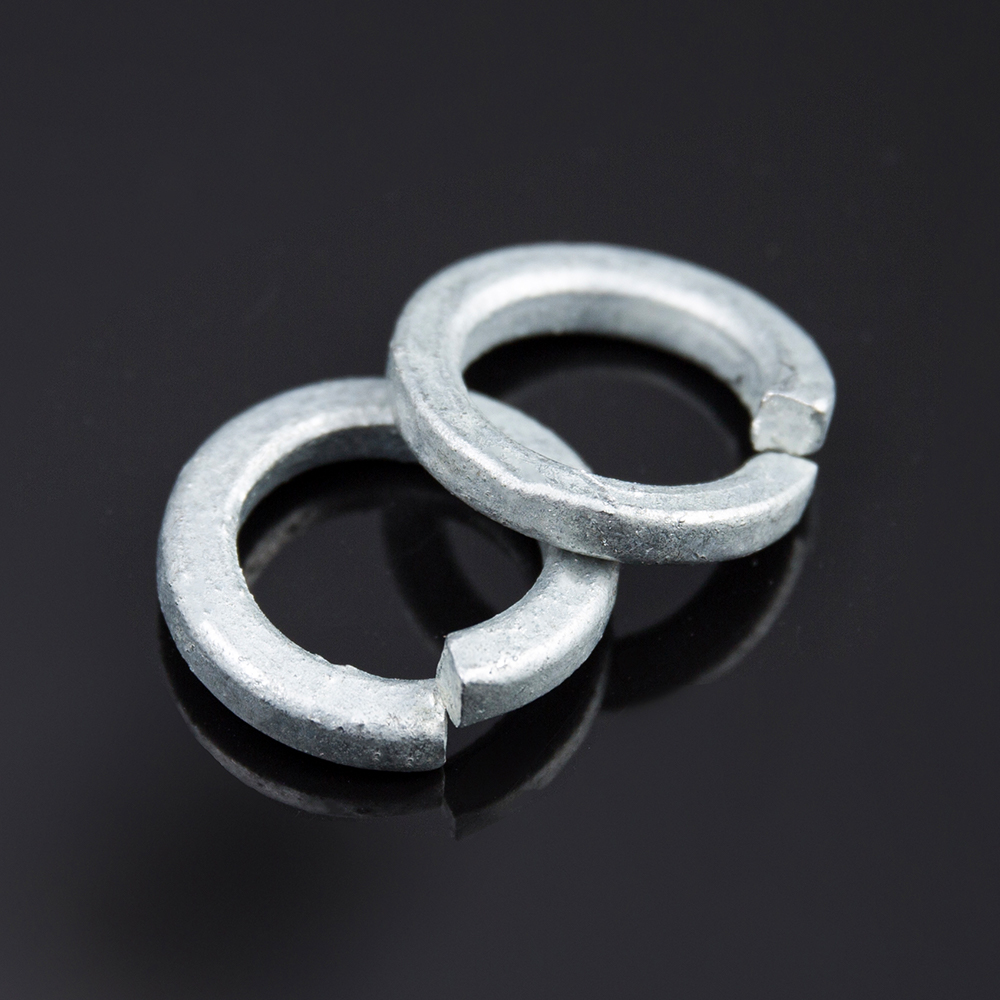 DIN 127 Metric Spring WasherA split helical washer for metric bolts that supplies elastic take-up under vibration and thermal cycling, suiting a standard metric restock programme across common plant sizes.View Product →
Buy on standard designation, material match and pairing discipline, not on locking claims. The comparison below sets helical spring washers against the alternatives most purchasing teams weigh them against:
| Option | Vibration resistance | Elastic take-up | Cost per position | Best suited to |
| Helical spring washer (DIN 127) | Not demonstrated in tests | Good at low loads | Very low | Static joints needing tolerance take-up |
| Tooth lock washer | Limited, surface-dependent | None | Low | Light duty and electrical grounding |
| Nylon insert lock nut | Good within its temperature range | None | Moderate | Reusable, vibration-exposed fasteners |
| Plain washer with verified preload | Preload does the work | None | Low | Everything load-critical |
Tooth lock washers attack the problem by biting rather than flexing - our comparison of external and internal tooth lock washers explains when that trade-off makes sense.
Material match is the second lever. In coastal, chemical or washdown environments, specify a matched stainless steel bolts and washers programme so the cheapest part in the stack is not the first to corrode.
Four pairing rules cover most assemblies:
North American legacy equipment still calls out imperial sizes, and mixing inch and metric parts on one assembly invites tolerance errors. Sourcing both systems from one exporter, the model used by specialists such as Zhejiang Chance & Union Import and Export Co., Ltd., keeps part lists short and specifications consistent:
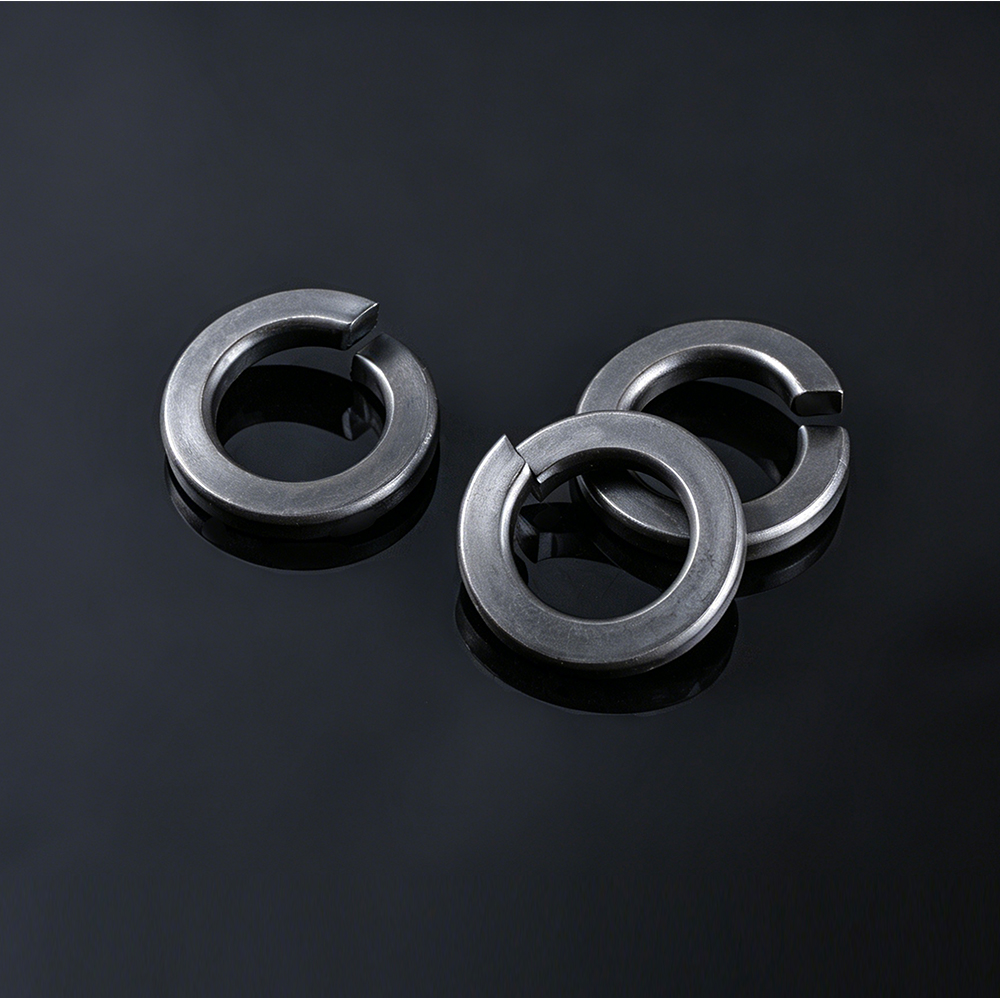 Imperial Spring Washer for Inch FastenersA split lock washer made for UNC/UNF and other inch-series bolts, letting legacy equipment source imperial and metric washers from one supplier to keep specifications consistent.View Product →
No. Junker-type vibration tests since 1969 show they do not stop rotation loosening, and some series record faster loosening than a plain nut alone. Treat them as elastic take-up parts and rely on preload, prevailing-torque hardware or positive locking against vibration.
Three things: taking up end play from wear or tolerance stack, adding a little elastic travel in low-load joints, and spreading load when paired with a flat washer - all at very low cost in metric and imperial sizes.
Yes in most assemblies. The flat washer protects the joint face from the split edges and creates a stable bearing surface; the spring washer sits between the flat washer and the bolt head or nut.
DIN 127 is the common metric standard with sizes from roughly M2 upward, and ASME B18.21.1 covers imperial helical spring lock washers. Both are stocked in spring steel with zinc plating and in stainless steel.






 English
 Español
 عربى
عربى